Notice: This is a proposal only. Nothing described here is currently in effect. Volunteers and community members are welcome to help advance this proposal.
Reform Phases
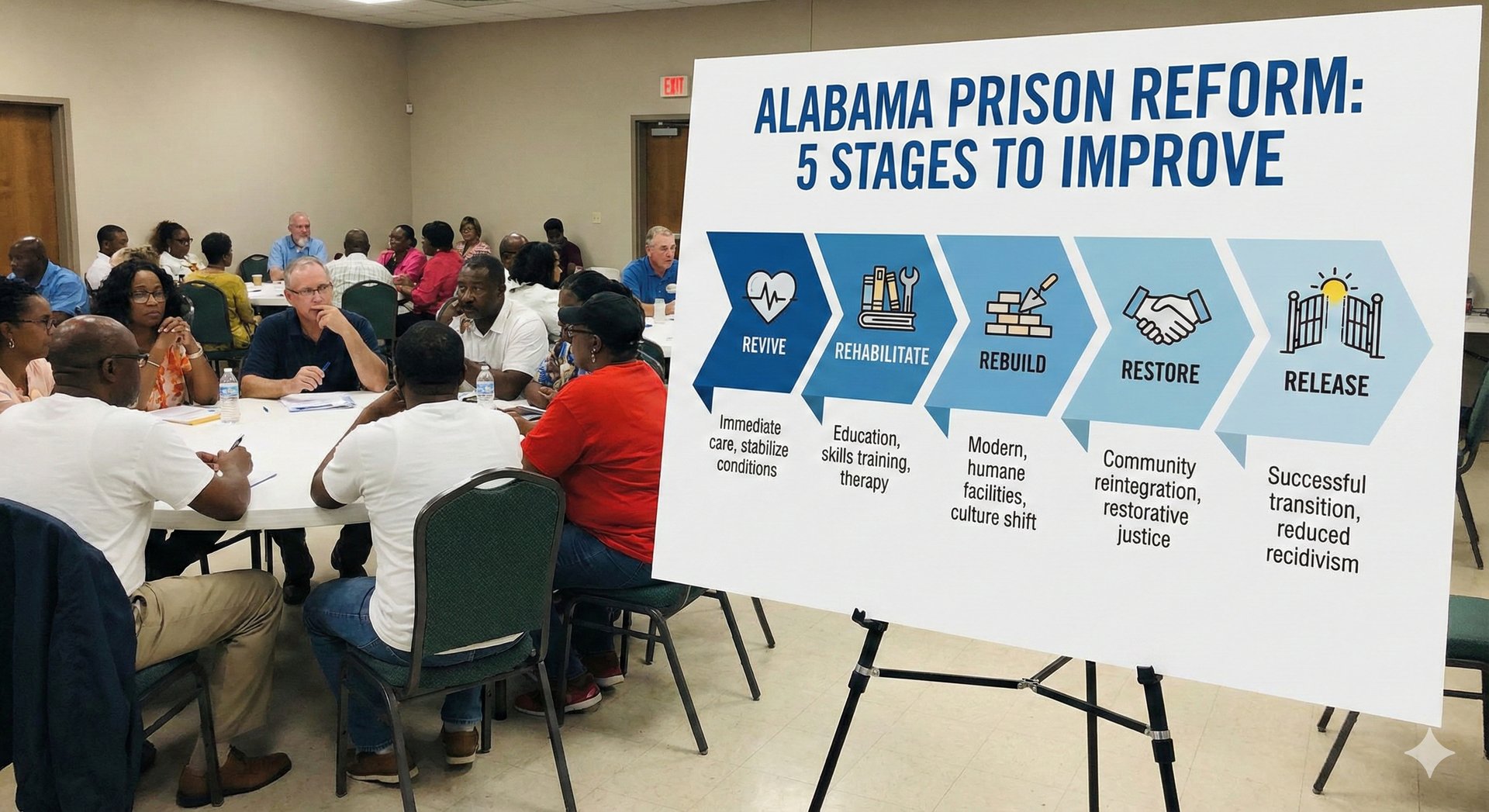
Revive
Focus: Safety · Structure · Spiritual Reflection · Emotional Reset · Accountability · Counseling
The Revive stage is the first phase of transformation. Its purpose is to stabilize individuals, calm the environment, and create the internal foundation necessary for real rehabilitation. This phase interrupts cycles of crisis, trauma, and destructive behavior so each person can begin their journey with clarity, accountability, and emotional grounding.

6 AM – 7 AM — Physical Training & Wellness Conditioning
Light-to-moderate exercise to help:
Reduce anxiety and aggression
Support detoxification and addiction withdrawal
Improve sleep and appetite regulation
Build discipline and routine
This is essential for emotional stabilization and long-term behavioral change.
7 AM – 9 AM — Breakfast Window
8 AM – 12 PM — Intensive Counseling & Trauma Intervention
This is the heart of Revive. Activities include:
Cognitive Behavioral Therapy (CBT)
Anger de-escalation
Crisis counseling
Trauma-informed therapy
Addiction recovery sessions
One-on-one and group counseling
11 AM – 1 PM — Lunch Window
Nutrition period + downtime for mental decompression.
1 PM – 4 PM — Group Counseling, Psychoeducation & Mindfulness Work
During this block, residents participate in:
Mindfulness-Based Cognitive Therapy
Psycho-educational therapy
Guided self-help programs
Emotional-regulation workshops
Conflict-resolution skill-building
4 PM – 5 PM — Evening Meditation & Reflection
A second daily meditation reinforces:
Emotional reset
Stress management
Processing of complex counseling topics
Personal insight and accountability
5 PM – 7 PM — Dinner Window
Core Components
AI-assisted therapy, tele-therapy, group therapy, and in person sessions
Strict routines
Limited privileges
High accountability for behavior
This design removes comfort-based distractions and forces participants to confront internal turmoil, trauma, and behavioral patterns.
Intensive individual & group counseling to address trauma, fear, instability, and violent behavior.
Structured addiction, anger, and trauma interventions using evidence-based programs such as CBT and anger management.
Daily meditation or faith-based reflection to build mindfulness, responsibility, and emotional discipline.
Physical exercise & structured routines to improve health, reduce anxiety, and establish predictable daily rhythms.
Emotional regulation & conflict-resolution training to reduce impulsive reactions and promote thoughtful decision-making.
Trust-building & accountability practices that strengthen respect between staff and residents and reinforce positive behavior.
Therapeutic intensity remains high during Revive because this stage focuses on stabilizing individuals whose past trauma and untreated mental health issues often drive violent behavior.
In this stage, participants receive only the bare minimum accommodations, emphasizing responsibility and encouraging them to focus on internal change rather than physical comfort. This stage is intentionally structured to remove distractions and create space for honest reflection, emotional stabilization, and behavioral recalibration using tele-therapy, face-to-face counseling, and group therapy. After six months of successful participation—with no disciplinary actions and a positive counselor recommendation—an individual becomes eligible to advance to the Rehabilitate phase. The overarching goal of this period is to stabilize the mind and body, create a meaningful pause from harmful habits, confront the consequences of past actions, interrupt destructive behavioral cycles, and spark a genuine, self-driven commitment to transformation.
Daily Routine
5 AM – 6 AM — Spiritual Meditation & Internal Reflection
A quiet, structured reflection block to build emotional intelligence, personal accountability, and the ability to self-regulate.
Rehabilitate
Focus: Evidence-based programs · Learning · Behavior Change · Personal Growth
The Rehabilitate stage addresses the root causes of criminal behavior by giving individuals the education, therapeutic tools, and structured support needed to transform thinking, behavior, and long-term decision-making. This phase builds on the emotional stabilization achieved in Revive and shifts focus toward skill-building, academic achievement, cognitive restructuring, and personal development.

6 AM – 7 AM — Physical Training
Daily fitness to improve overall mental and physical health.
Reduce aggression and anxiety
Support addiction recovery
Build discipline and stamina
7 AM – 10 AM — Breakfast (Culinary Program Operated)
Breakfast served by detainees enrolled in the Culinary Arts job-training program, reinforcing workforce readiness and responsibility.
8 AM – 12 PM — Education & Vocational Training
GED classes
College coursework (ACCS online)
Foundational computer skills
Skilling programs (carpentry, welding, HVAC, coding, logistics, etc.)
11 AM – 2 PM — Lunch Window (Culinary Arts-Operated)
1 PM – 3 PM — Continued Academic / Vocational Training
3 PM – 4 PM — Counseling & Behavioral Therapy Sessions
Smaller-group counseling focused on:
Cognitive Behavioral Therapy
Trauma-informed care
Relapse prevention
Emotional regulation and conflict resolution
Personal accountability
This is a reduced-intensity continuation of Revive’s therapeutic model.
4 PM – 5 PM — Evening Spiritual Meditation
A second daily grounding period emphasizing emotional intelligence, gratitude, and interpersonal maturation.
5 PM – 7 PM — Dinner Window
6 PM – 9 PM — Recreational, Educational, and Social Development Activities
Recreational sports
Peer study groups
Self-help and guided study programs
These activities reinforce structure, social skills, and prosocial behavior.
Core Components
Evidence-based counseling (CBT, trauma therapy, addiction treatment)
Continued therapy—less intensive than Revive—focused on cognitive restructuring, emotional healing, and developing healthy coping strategies.
Detainees engage in structured educational programming, including literacy pathways, GED preparation, online degree programs in partnership with the Alabama Community College System, and formal vocational training.
Mandatory skill acquisition
ALL detainees must learn a marketable skilled trade—ensuring employability upon release and reducing recidivism.
Education & intellectual development activities
Study groups, computer lab access, structured reading time, and book clubs reinforce academic discipline and cognitive development.
Improved living conditions & recreation
Balanced recreational activities and fitness-center access promote physical health, reduce misconduct, and encourage prosocial behavior.
AI-enabled learning tools & personalized tutoring
Adaptive technology supports individualized learning needs, providing real-time coaching and progress tracking.
Emotional regulation & conflict-resolution training
Programs reinforce communication skills, emotional maturity, and peaceful conflict management strategies.
In the Rehabilitate stage, participants transition from stabilization to active growth, shifting focus from crisis recovery to structured learning, emotional development, and skill-building. While accommodations improve slightly to support learning, the environment remains intentionally structured to encourage discipline, accountability, and prosocial behavior. This phase equips individuals with education, therapeutic tools, and marketable skills, helping them replace destructive habits with productive, future-oriented routines. Participants are required to pursue academic credentials, engage in workforce training, and continue counseling to strengthen emotional regulation and decision-making skills. The emphasis is on replacing old cognitive patterns with healthy, sustainable pathways for success.
After completing vocational training, earning a GED or college degree, maintaining one full year without disciplinary actions, and receiving a favorable recommendation, a participant becomes eligible to advance to the Rebuild phase. The overarching goal of this period is to develop the mindset, knowledge, skills, and emotional maturity necessary for long-term success. This stage transforms detainees into students, trainees, and future workers—laying the foundation for a stable reentry and dramatically lowering long-term recidivism.
Daily routine
5 AM – 6 AM — Spiritual Meditation & Emotional Grounding
A structured reflection period that promotes emotional stability, mindfulness, and interpersonal calm. Participants practice gratitude, breathwork, or faith-based meditation to prepare mentally for the day.
Rebuild
This stage focuses on employment, social skills, independence, and preparing individuals for life beyond confinement. Living conditions and responsibilities increase to reflect real-world expectations while still providing structure, support, and accountability.

Core Components
Improved Living Conditions (2-Person Rooms, No Bars)
Residents move into updated, normalized housing that promotes dignity, privacy, and responsibility. This physical environment reinforces the transition away from punitive confinement toward personal stability and prosocial behavior.
Workforce Training & Living-Wage Employment
Participants work full-time and earn living wages through programs such as:
PIECP (Prison Industry Enhancement Certification Program)
Work Release Program
Alabama Correctional Industries
Facility-based skilled trades and industry partners
Income supports restitution, savings, and financial responsibility—key predictors of successful reentry.
Socialization & Communication Skill Development
Therapy transitions from counseling to coaching, emphasizing:
Workplace communication
Team behavior and reliability
Conflict navigation
Relationship-building
Leadership and mentoring roles
This stage builds the interpersonal maturity required for community reintegration.
Higher Education Opportunities
Participants can pursue:
Associate degrees
Bachelor’s degrees through University of the People or ACCS partnerships
Continued literacy, academic support, and advanced vocational programs
Education deepens cognitive growth and long-term employability.
Family & Relationship Strengthening
To support emotional stability and reduce future violence, participants may qualify for:
Expanded family visitation
Healthy relationships are key protective factors against recidivism.
Fitness, Recreation & Structured Routines
Balanced routines help reduce stress, prevent violence, and promote well-being.
Physical training, recreation, and structured time management mirror real-world expectations.
Continued Emotional & Behavioral Coaching
Participants still attend coaching/counseling sessions to reinforce:
Emotional regulation
Accountability
Healthy decision-making
Relationship management
Workforce professionalism
Progression Requirement
To advance to the Restore stage, participants must:
Become proficient in a skilled trade
Maintain two consecutive years with no disciplinary actions
Receive a positive staff recommendation
Daily Routine
5 AM – 6 AM — Spiritual Meditation & Self-Actualization Work
A reflective period that reinforces discipline, purpose, and identity development.
Participants focus on internal clarity and setting intentions for the workday.
6 AM – 7 AM — Physical Training & Health Conditioning
Daily exercise improves mental health, decreases stress, and builds the stamina needed for full-time work.
This block establishes consistency and prepares participants for long-term workforce routines.
7 AM – 11 AM — Breakfast Window (Culinary Arts-Operated)
Breakfast service overseen by detainees in culinary training.
8 AM – 12 PM — Work Assignments (Internal Employment)
Participants perform paid, full-time work at state or federal minimum wage, according to their vocational track.
Examples of assignments:
Maintenance (HVAC, plumbing, electrical, carpentry)
Alabama Correctional Industries roles
Laundry, sanitation, or warehouse operations
Administrative assistance and clerical work
Facility landscaping and agriculture
This simulates a standard workweek and strengthens employability.
11 AM – 3 PM — Lunch Window (Culinary Arts-Operated)
Flexible lunch accommodates rotating work schedules.
1 PM – 4 PM — Continued Work Assignments
Second work block reinforces:
Productivity
Workplace discipline
Team-based skills
Trade mastery
Participants continue earning wages and demonstrating reliability.
4 PM – 5 PM — Coaching & Behavioral Development
A shift from therapy to professional coaching:
Workplace communication
Social interaction skills
Conflict navigation
Leadership development
Accountability practices
Coaching in this phase prepares individuals for the social and behavioral expectations of outside employment.
3 PM – 7 PM — Dinner Window (Culinary Arts-Operated)
5 PM – 9 PM — Recreational & Social Development Activities
Designed to mirror a balanced life structure:
Recreational sports
Peer mentorship circles
Study or reading time
Relationship-building activities
Emotional wellness activities
Religious or personal development classes
These activities reinforce prosocial behavior and stress management.
Participants engage in full-time work through programs that build on Alabama’s existing correctional infrastructure, including PIECP, Work Release, and Alabama Correctional Industries. They earn living wages, allowing them to support restitution, savings, and family responsibilities. Academic opportunities expand as well, with the option to pursue an associate or bachelor’s degree through partnerships such as the University of the People, while continuing personal development and recreational activities that promote balance and well-being.
After becoming proficient in a skilled trade, maintaining two years without disciplinary actions, and receiving a formal recommendation, a participant becomes eligible to transition into the Restore phase, where they deepen accountability, healing, and community reintegration.
The overarching goal of this period is to develop employable individuals with strong work habits, prosocial communication skills, financial stability, and emotional maturity, ensuring they are fully prepared to succeed both inside the facility and in society upon release.
Restore
Focus: Accountability, Healing & Community Reintegration
The Restore phase focuses on repairing harm, rebuilding relationships, strengthening accountability, and preparing individuals for healthy reintegration. This stage bridges personal transformation with community responsibility, emphasizing healing for both the individual and those impacted by their actions.

Core Components
Restorative Justice Programs
Participants take part in structured restorative justice sessions designed to:
Confront the impact of their actions
Understand the harm caused to victims and communities
Develop empathy and personal accountability
Create pathways for symbolic or practical restitution
These programs promote healing and encourage participants to take responsibility in meaningful ways.
Trauma-Informed Family Counseling
Families often endure significant emotional strain. Restore offers:
Facilitated family therapy
Communication rebuilding
Conflict-resolution support
Reconnection planning for reentry
This strengthens family stability — a major predictor of successful reintegration.
Victim-Centered Accountability Practices
Recognize victim needs and experiences
Engage in accountability exercises
Participate in victim impact curriculum
Develop reparative action plans
These practices reinforce maturity, responsibility, and moral reasoning.
Enhanced Communication & Relationship Privileges
To promote stability and belonging, eligible individuals may receive:
Expanded phone and video communication access
Supervised family visits
Continued spousal visitation programs (supported by research showing reductions in institutional violence)
Healthy relationships reduce recidivism and improve post-release outcomes.
Emotional Intelligence & Social Maturity Development
Participants continue coaching focused on:
Emotional regulation
Empathy-building
Communication skills
Conflict de-escalation
Healthy boundary setting
These skills are essential for successful reintegration and community living.
Community Reintegration Readiness Training
Restore includes programming that prepares individuals for release:
Reentry planning
Identification restoration
Financial literacy and budgeting
Housing pathway preparation
Digital literacy and communication skills
Transportation planning
This ensures a smooth transition into the Release stage.
In the Restore stage, participants turn their focus toward healing, accountability, and rebuilding the relationships impacted by their actions. This phase emphasizes emotional maturity, victim-centered responsibility, and the restoration of healthy family bonds. Having gained stability, education, and work skills in earlier phases, individuals now deepen their capacity for empathy, communication, and community responsibility. Restore is designed to confront the social and relational impact of crime through structured restorative justice programs, trauma-informed counseling, and family engagement. Participants learn to reflect not only on the consequences they experienced but also the harm experienced by victims, families, and the broader community. As individuals strengthen these interpersonal foundations, they begin to rebuild trust, form healthier connections, and prepare for meaningful reintegration into society.
Family stability is supported through expanded communication privileges, supervised family therapy, and continued access to spousal visitation programs—practices shown to reduce violence and improve reentry outcomes. Coaching during this phase reinforces communication skills, emotional regulation, conflict navigation, and readiness for community expectations. After demonstrating emotional readiness, successfully participating in restorative programming, maintaining two years with no disciplinary actions, and receiving a positive recommendation, participants become eligible to progress to the Release phase, where structured reentry preparation begins.
The overarching goal of Restore is to repair relationships, strengthen accountability, promote healing, and prepare individuals for safe, humane, and responsible reintegration, ensuring returning citizens reenter society with emotional stability, strong support networks, and a commitment to living peacefully within their communities.
Daily Routine
6–7 AM — Morning Meditation & Reflection
Daily guided meditation to cultivate emotional regulation, empathy, and self-awareness. Sets the tone for a calm, accountable day.
7–10 AM — Breakfast & Family Communication Window
Breakfast service followed by a dedicated period for structured communication with approved family members (calls, video messages, or supervised messaging).
8 AM–12 PM — Restorative Justice & Relationship Programs
Participants engage in:
Restorative justice curriculum
Victim impact coursework
Emotional intelligence workshops
Trauma-informed family counseling sessions
These deepen accountability and repair relational harm.
11 AM–2 PM — Lunch Window
Nutrition and rest period.
1–3 PM — Coaching & Skill-Building Groups
Programs focused on:
Communication skills
Conflict resolution
Empathy-building
Parenting and relationship workshops
Financial literacy tied to reentry preparation
3–4 PM — Reentry Readiness Sessions
Planning and support related to:
Housing
Transportation
Employment
Identification and documentation
Digital literacy
4–5 PM — Evening Meditation or Spiritual Reflection
Promotes grounding, peace-building, and emotional maturity.
5–7 PM — Dinner Window
Evening nutrition and decompressing time.
6–9 PM — Community-Building & Recreation
Activities reinforcing healthy interaction and prosocial behavior:
Peer mentorship circles
Group recreation
Support meetings
Family virtual engagement (where appropriate)
Peer Mentorship & Community Support Networks
Participants are paired with mentors who model prosocial behavior and help build:
Stability
Confidence
Positive routines
Community accountability
Mentorship significantly reduces the likelihood of reoffending.
Release
Focus: Reentry, Support & Long-Term Stability
The Release phase focuses on building a stable bridge from incarceration to community life. This stage provides structured reentry planning, employment placement, housing preparation, and long-term support systems to ensure individuals succeed after completing the program. Stability—not speed—is the priority.

In the Release stage, participants transition from a structured correctional environment into the community with a clear, supported, and achievable pathway toward stability and independence. This phase focuses on employment placement, housing readiness, ongoing therapeutic support, and the practical skills required for long-term success. It is designed to prevent individuals from returning to the conditions that contributed to previous offending and to ensure they have the resources needed to build a safe, sustainable life.
Participants work closely with reentry coaches to establish verified employment, secure stable housing, reestablish identification and documentation, build financial literacy, and receive continued emotional and behavioral support. This phase strengthens connections with family, employers, community mentors, and support networks, laying a foundation for healthy reintegration. Structured supervision, gradual community exposure, and continued counseling ensure that participants experience a stable, guided reentry process rather than a sudden, unsupported release. After completing a comprehensive reentry plan, demonstrating employment readiness, maintaining emotional and behavioral stability, and receiving a formal release recommendation, individuals transition fully into community life with ongoing mentorship and wraparound support services.
The overarching goal of the Release phase is to provide the stability, structure, and support necessary to ensure lasting success, reduce recidivism, and promote safer, healthier families and communities throughout Alabama.
Core Components
Comprehensive Reentry Planning
Each participant works with a reentry coach to develop a detailed, personalized transition plan that includes:
Housing arrangements
Verified employment or job placement
Transportation plans
Identification restoration (ID, birth certificate, Social Security card)
Medical and mental health continuity of care
A complete reentry plan is required before release.
Employment Placement & Career Support
Because employment is the strongest predictor of post-release success, individuals receive:
Job placement assistance
Partnerships with Alabama employers
Resume building and interview coaching
Financial literacy training
Support in retaining employment through mentorship
Participants apply the skills earned in earlier phases directly to real-world work.
Housing Stability & Community Reintegration Support
Safe, stable housing is secured before release.
Supports may include:
Transitional housing
Faith-based or community-based housing programs
Rental assistance preparation
Family reunification planning
Housing stability dramatically lowers recidivism and improves community safety.
Continued Counseling & Emotional Support
Participants maintain access to:
Trauma-informed therapy
Relapse-prevention support
Anger management reinforcement
Emotional regulation coaching
Peer-support networks
This ensures they do not lose the emotional progress made inside.
Family Reunification & Relationship Strengthening
To ensure long-term stability, the Release stage supports:
Parenting classes
Supervised family reunification sessions
Communication rebuilding
Relationship and conflict-management skills
Restored family bonds strongly protect against reoffending.
Mentorship & Wraparound Community Supports
Participants are connected with:
Community mentors
Faith-based partners
Employers
Civic organizations
Alumni networks
This extended safety net prevents isolation and keeps individuals anchored.
Advancement Requirement
Demonstrate stable employment
Maintain housing
Sustain positive behavior and accountability
Complete all components of their reentry plan
Receive a final recommendation from their reentry team
Daily Routine
6–7 AM — Morning Meditation & Goal Setting
A grounding routine that reinforces emotional stability, personal accountability, and intentional planning for reentry success.
7–10 AM — Breakfast & Reentry Communication Window
Breakfast service followed by time for communicating with employers, mentors, reentry coordinators, and family members to finalize plans.
8 AM–12 PM — Employment Preparation & Workforce Transition
Participants engage in:
Job placement coaching
Resume and interview workshops
Digital literacy and workplace communication training
Verified employment preparation with Alabama workforce partners
For those already in work-release roles, this block includes supervised off-site or hybrid employment.
11 AM–2 PM — Lunch Window
Meal period and personal reflection time.
1–3 PM — Reentry Planning Sessions
A structured block dedicated to finalizing all components of a complete reentry plan:
Housing placement
Identification (ID, SSN, birth certificate)
Transportation plan
Medical and mental health continuity of care
Financial literacy and budgeting
Legal obligations and documentation
3–4 PM — Counseling, Mentorship & Support Groups
Continued therapeutic support focused on relapse prevention, emotional regulation, relationship rebuilding, and navigating community challenges.
4–5 PM — Evening Meditation or Spiritual Reflection
A calm, reflective close to the structured day that promotes readiness and emotional resilience.
5–7 PM — Dinner Window
Nutrition and decompressing time.
6–9 PM — Independent Skill-Building, Recreation & Family Reintegration Activities
Flexible block for:
Mentor meetings
Peer support groups
Healthy recreation
Family reunification sessions
Online coursework or job training
Housing or employer follow-ups
Graduated Supervision & Accountability
Release includes a structured step-down approach:
Regular check-ins
Employment verification
Housing stability confirmation
Continued education or training
Random wellness checks
Supervision focuses on support—not punishment—while ensuring public safety.
Advancement Requirement
Demonstrate stable employment
Maintain housing
Sustain positive behavior and accountability
Complete all components of their reentry plan
Receive a final recommendation from their reentry team
GET INVOLVED
© 2026. All rights reserved.