Notice: This is a proposal only. Nothing described here is currently in effect. Volunteers and community members are welcome to help advance this proposal.
Fact Sheet
Alabama Prison Reform Proposal – Fact Sheet
Alabama’s prison system is among the most overcrowded, violent, and expensive in the United States. This fact sheet summarizes key data from ADOC reports, independent investigations, and federal findings to provide a clear picture of the challenges facing the system — and the evidence supporting reform.
Overcrowding & Population Pressures
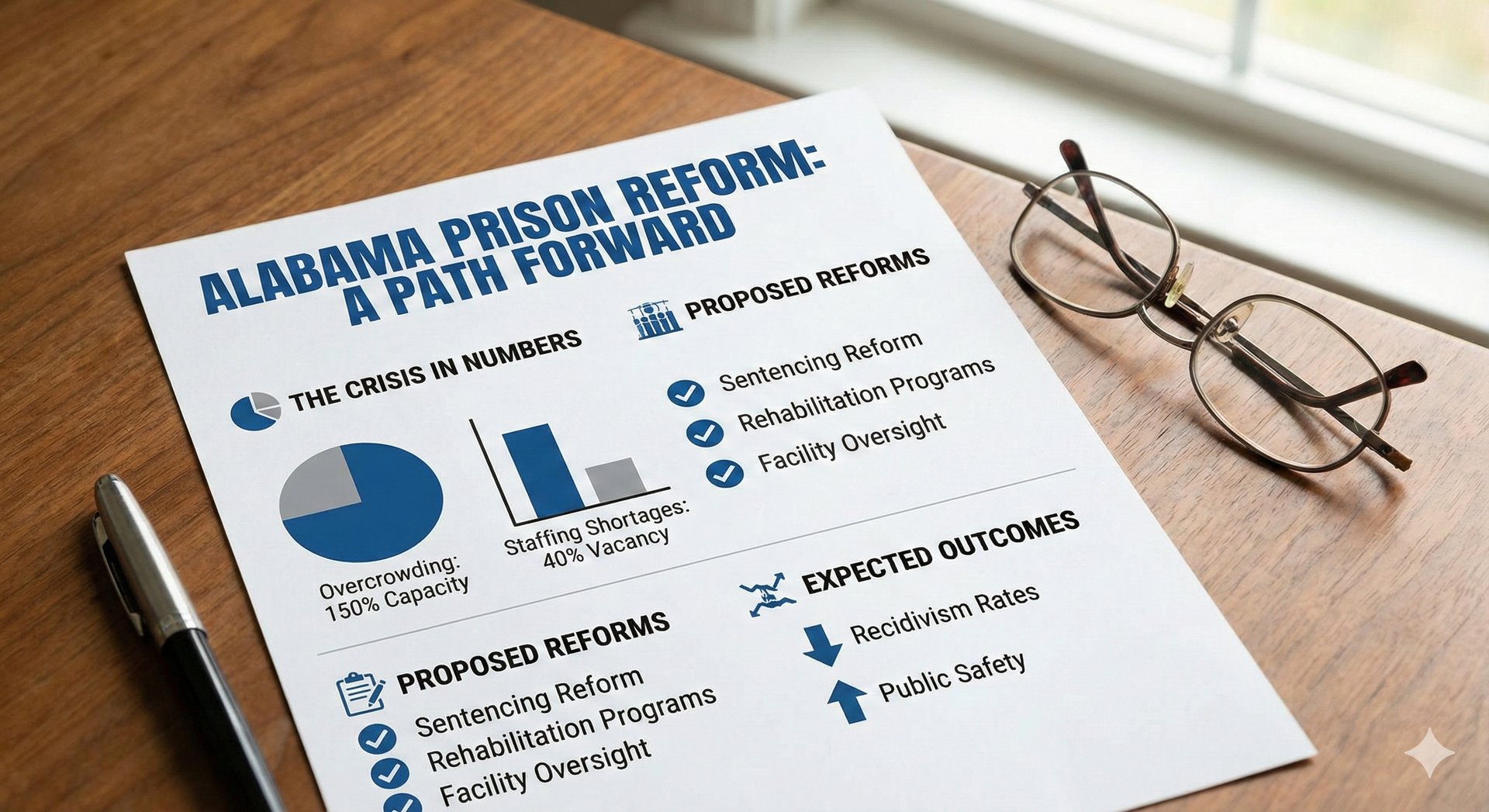
ADOC houses 21,121 people in facilities designed for 12,115 beds — 174% overcrowded.
Jurisdictional population increased from 27,428 (Aug 2024) to 28,246 (Aug 2025) — a rise of 818 people in one year.
Admissions continue to outpace releases, with 9,977 admissions vs. 9,167 releases in a recent reporting period.
Why it matters:
Overcrowding drives violence, worsens medical and mental health conditions, strains staff, and increases taxpayer costs.
Violence & Mortality
Alabama has one of the highest prison mortality rates in America.
335 deaths in 2023 (including homicides and overdoses).
274 deaths in 2024.
High rates of assaults, disciplinaries, and drug-related deaths documented monthly.
Chronic understaffing results in dorms operating with 1 officer for 100–200+ people.
Why it matters:
Unsafe conditions threaten incarcerated people, correctional officers, and Alabama communities.
Staffing & Operational Challenges
Severe shortages of correctional officers across major facilities.
High turnover due to unsafe working conditions and burnout.
Rising state spending is heavily tied to staffing incentives, overtime, and crisis response.
Why it matters:
A functional prison system requires adequate staffing, training, and safe working environments.
Fiscal Impact – The $5 Billion Crisis
According to Alabama Appleseed and public budget records:
Alabama has spent over $5 billion in five years on corrections.
ADOC appropriations rose from $610.7M (2022) to $826.7M (2026).
New megaprisons cost $1.3B, with per-bed construction costs exceeding the price of an average Alabama home.
At least $57M in legal fees has been paid due to unconstitutional conditions.
Why it matters:
Despite record spending, violence remains high and recidivism unchanged — meaning the current approach is costly and ineffective.
Federal Findings
The U.S. Department of Justice has raised repeated concerns regarding:
Excessive violence
Sexual abuse
Inadequate mental health and medical care
Systemic failure to protect people in custody
Why it matters:
Alabama faces ongoing federal oversight, potential consent decrees, and constitutional challenges.
Educational & Rehabilitative Programming
ADOC’s own reports highlight both the promise of rehabilitation and its severe underfunding:
866 completions in drug treatment programs
481 completions in reentry programming
18 GEDs earned
712 vocational certificates awarded
ATEF program: 230 graduates, 148 certificates issued in one year
Why it matters:
Education and treatment significantly reduce recidivism — but current capacity reaches only a small fraction of incarcerated people.
Key Takeaways
Alabama prisons are dangerously overcrowded and understaffed.
Violence and deaths remain among the highest in the nation.
Taxpayers are spending more than ever, yet achieving poor results.
Rehabilitation programs work — but are underutilized.
Without reform, Alabama risks continued federal intervention and escalating costs.
Why Reform Works
The Alabama Prison Reform Proposal is built on evidence-backed pillars:
Revive: Stabilization & safety
Rehabilitate: Education, treatment, counseling
Rebuild: Workforce development & vocational training
Restore: Victim-centered justice & family support
Release: Structured reentry & community reintegration
These solutions lower violence, reduce recidivism, protect victims, support officers, strengthen families, and save taxpayer dollars.
GET INVOLVED
© 2026. All rights reserved.